Fire

1.0 Introduction.

2.0 Risk of Fire

3.0 Fire Detection and Warning

4.0 Emergency Escape

5.0 Evacuating the Workplace & Fire Fighting

6.0 Maintenance & Testing

7.0 Management of Fire Risk

8.0 Legislation & Guidance

9.0 For Further Information

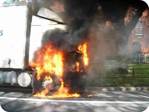
Truck on Fire


1.0 Introduction

Back to Top

Fire poses a significant risk to the safety of employees and others who may be in the workplace. The Health & Safety Authority has a role in monitoring the effectiveness of employers management of the risk associated with fire. Employers should also be aware that much responsibility for enforcement in relation to fire rests with their Local Authority. The following website gives a range of information on general fire precautions in all environments including the workplace.

As an employer or manager, you must assess the possibility of a fire in the workplace and the associated means of all occupants escaping to safety in the event of a fire. In order to carry out a successful risk assessment with respect to fire, you must first consider the potential sources of fire in a workplace. Following on from that, the fuel that could sustain a fire must be assessed and controlled. In addition, fire detection, emergency lighting (lighting that will provide adequate levels of background and escape route lighting in the event of a power failure) and emergency egress must also be addressed. Two recent standards have been published in Ireland in 2008 by the National Standards Authority of Ireland (NSAI), which deal with the issues of Emergency Lighting (I.S. 3217) and Fire Alarm Installation (I.S. 3218).


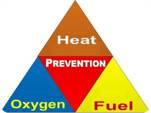
A key way to visualise fire starting and spreading is to consider the “fire triangle.”

Fire Triangle, Oxygen,Fuel,Heat

Fire Triangle

This shows the three necessary ingredients (fuel, oxygen and heat) for a fire to commence and propagate in a workplace (or anywhere). Without the three constituents above a fire will not start or spread. A key strategy to prevent or extinguish any fire is to remove one or more of the three items above namely heat, oxygen or fuel. The risk assessment should focus on all of the above to minimise the risk of a fire starting and to have a strategy in place to fight a fire at the early stages to prevent it spreading. However, emergency procedures must also be in place and practiced to ensure safe evacuation in the event of a fire becoming established.


2.0 Risk of Fire.

Back to Top

Most workplaces will have a number of hazards which give rise to a risk of fire in the workplace. Some of these hazards are unavoidable but must be controlled. Any hazard that is avoidable should be removed and replaced, if necessary, by a less hazardous option.

 Fire Risks Inherent in the Workplaces.

In many cases the hazards might arise from everyday items or activities such cooking or electricity. In other cases the activities specific to the workplace may pose a significant risk of fire. Planned activities involving naked flames (such as flambéing in catering) will pose a significant fire risk, which must be controlled.

Flambe

Fire Risk in Cooking

Fire risks can also arise from a particular substance in use or being mixed or manufactured in the workplace. If significant quantities of flammable liquids or gasses are being used or manufactured, then highly specialised engineering and controls will be necessary to address all aspects of fire safety inherent in the process. In addition to the items within a workplace, the layout and makeup of a building or work environment can have a significant bearing on how fire spreads and the potential for all occupants to escape safely from any fire that might occur. What’s happening in the workplace and the persons occupying a workplace will have huge bearing on the type of emergency plans that will need to be formulated for safe evacuation or safe refuge in the event of fire. For example, a hospital will require a very sophisticated emergency plan to cater for the lack of mobility and illness among the patients. The emergency plan may require a number of safe refuges to be identified in the event of fire, with the intention that these refuges would provide shelter for an adequate duration from any fire that might occur.

Other Fire Risks.

As well as risks which are inherent to the workplace, fire risk also be introduced through the activity of construction or maintenance contractors. These might include risks emanating from the type of equipment in use such as welders, grinders or by the introduction of other heat sources and flammable and combustible material that might be contributory in starting a fire. It is also relevant that construction work and maintenance can alter the workplace to such an extent that previously made emergency plans can be rendered inoperable. This might happen because of the blocking of exit routes, re-arranging of the workplace layout or the switching off of fire alarm or other life saving installation to allow maintenance or construction to proceed. Because of this, revised plans may need to be drawn up before work begins and will need to be tested and reviewed to ensure that they remain up to date for the duration of the works.


3.0 Fire Detection and Warning

Back to Top

A fire in the workplace should be detected quickly and a warning given so that people can escape safely. Early discovery and warning will increase the time available for escape and enable people to evacuate safely before the fire takes hold and blocks escape routes or makes escape difficult.

The nature and extent of the fire detection and warning arrangements in the workplace will need to satisfy the requirements indicated by the employers risk assessment.

In small workplaces where a fire is unlikely to cut off the means of escape, eg open-air areas and single-storey buildings where all exits are visible and the distances to be travelled are small, it is likely that any fire will be quickly detected by the people present.

In larger premises, particularly multi-storey premises, an electrical fire alarm system with manually operated call points is likely to be the minimum needed. In unoccupied areas, where a fire could start and develop to the extent that escape routes may become affected, it is likely that a form of automatic fire detection will also be necessary. A fire sprinkler system can also give a high degree of protection and can prove highly effective in combating a fire risk.

Fire Sprinkler

Sprinklers –Effective in Combating  Fires

Fire Detection

 All workplaces should have arrangements for detecting fire. IS 3218 as gives a basis for assessing what type of detection system will be appropriate for a workplace and will also give guidance of its installation.  IS-EN 54 Parts 1 to 27 specifies requirements for component parts of a fire alarm system.

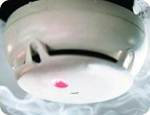
Smoke and flame detectors

Smoke Detector –Detects a Fire Starting

 Consideration must be given to any parts of the workplace where a fire could start and spread undetected. This could be a storage area or a basement that is not visited on a regular basis, or a part of the workplace that has been temporarily vacated, for example at mealtimes. Fires that start and develop unnoticed can pose a serious danger to people in the workplace.

The usual method of protecting people in workplaces where fire could develop for some time before being discovered is to protect vital escape routes, particularly staircase routes, with fire-resisting construction which may include fire-resisting doors.

Installing an effective, reliable automatic fire detection system, linked to an effective fire warning system, can sometimes allow people to reassess the degree of structural fire protection required on escape routes. This can provide a more cost-effective and convenient fire precaution. However, the whole subject of trade-offs between structural protection and other fire protection systems is a complex one and such decisions should only be made after consultation with your local fire authority.

In some workplaces, such as those providing sleeping accommodation or care facilities, automatic fire detection and a high degree of structural protection are essential in ensuring a satisfactory standard of fire safety.

Basic smoke alarms tend to be more sensitive than smoke detectors used in more sophisticated fire detection/alarm systems. An employer must be aware of any potential problems unwanted fire signals may cause. In some cases, unwanted fire signals can be reduced by using optical smoke alarms rather than ionisation ones.

In all instances the detector type chosen should be appropriate for the premises to be protected. For example, a heat detector may function better than a smoke detector in a fume-laden or dusty environment but may not be appropriate for the rest of the protected premises. Choosing the right type of detector will reduce the chances of it giving false fire signals. False alarms can cause costly interruptions to manufacturing processes and business activities. They also increase the risk to occupants if the fire brigade is responding to a false fire call and is not so readily available to tackle a real fire.

Before installing an automatic fire detection system, it is advisable to consult the fire authority about what you propose. This can help make sure the system is appropriate to the circumstances of the workplace and avoid unnecessary costs.

Automatic fire detectors or smoke alarms do not remove the need to provide a means for people to manually raise a fire warning, and this will be essential in the majority of workplaces.

Fire Alarm Control Panel

Fire Alarm Control Panel

Fire warning

In almost all buildings, a suitable electrically operated fire warning system, with manual call points positioned both on exit routes and adjacent to final exits should be installed. This should have sufficient sounders for the warning to be clearly heard throughout the workplace. The sound used as a fire warning should be distinct from other sounds in the workplace and, where background noise levels are high or an employee has a hearing impairment, it may also be necessary to install a visual alarm such as a distinctive flashing or rotating light.


Fire Alarm SounderBGU

Fire Alarm Sounder and Manual Call Point

In more complex buildings such as retail premises, where the evacuation system is based on staged or phased evacuation, or where people are unfamiliar with the fire warning arrangements, the landlord or employer might consider installing a voice evacuation system. The system could form part of a public address system and could give both fire warning signals and verbal instructions in the event of fire.

Where a public address system is used in conjunction with a fire warning system, both should over-ride any other function of the equipment (such as playing music). The public address element of the system should give clear verbal instructions and should over-ride the fire warning signal - this should be distinct from other signals which may be in general use.

If an automatic fire detection system and a manually operated electrical alarm system are installed in the same workplace, they should normally be incorporated into a single integral system. Voice evacuation systems should be similarly integrated to prevent confusion.

Electrical fire detection and alarm systems should normally comply with IS 3218 and with IS EN 54. Again, it is advisable to consult the fire authority about your proposals before installing a new fire warning system or altering an existing one.

Checklist

The following is a useful checklist which will help ensure that fire precautions are instigated and maintained to an acceptable standard.

  • Can the existing means of detection discover a fire quickly enough to raise an alarm in time for all the occupants to escape to a safe place?
  • Can the means for giving warning be clearly heard and understood throughout the whole premises when initiated from any single point?
  • If the fire detection and warning system is electrically powered, does it have a back-up power supply?
  • Have you told your employees about your fire warning system, will they know how to operate it and respond to it?
  • Are there instructions for your employees on how to operate the fire warning system and what action they should take on hearing a warning?
  • Have you included the fire detection and fire warning arrangements in your emergency plan?

4.0 Emergency Escape.

Back to Top

Means of escape in case of fire

The principle on which means of escape provisions are based is that the time available for escape (an assessment of the length of time between the fire starting and it making the means of escape from the workplace unsafe) is greater than the time needed for escape (the length of time it will take everyone to evacuate once a fire has been discovered and warning given).

Regardless of the location of a fire, once people are aware of it, they should be able to proceed safely along a recognisable escape route, to a place of safety.

Running Man Em Exit

Exit Sign  (with built in emergency power supply)

In order to achieve this, it may be necessary to protect the route, i.e. by providing fire-resisting construction. A protected route will also be necessary in workplaces providing sleeping accommodation or care facilities. It might also be necessary to apply positive air pressure to an escape route to discourage smoke from entering in the event of a fire.

The Association for Specialist Fire Protection -- Ireland on their website, http://www.asfpireland.ie/, provide advice and information about passive fire protection.

As an employer you must carry out a risk assessment to ensure that the means of escape remains adequate.

If, as a result of your risk assessment, you propose making any changes to the means of escape, you should consult the fire authority before making any changes.

When assessing the adequacy of the means of escape you will need to take into account:

  • the findings of your fire risk assessment
  • the size of the workplace, its construction, layout, contents and the number and width of the available escape routes
  • the workplace activity, where people may be situated in the workplace and what they may be doing when a fire occurs
  • the number of people who may be present, and their familiarity with the workplace
  • their ability to escape without assistance

All workplaces must have clearly identified means of escape in the event of fire. These escape routes must be kept clear at all times to ensure that everyone can exit the workplace in the event of a fire or other emergency. If an escape route or emergency exit must be blocked for any reason, then alternative arrangements must be made to cater for emergency evacuations. Also these arrangement must be conveyed to all those occupying the workplace and particularly to personnel such as fire wardens who will be assisting in overseeing any emergency evacuation. To understand what type of emergency evacuation routes might be needed, consideration should be given to the relevant Building Regulations. Even if the building was built before Building Regulations applied (before the early nineties) , very useful guidance can still be obtained to allow the duty holder comply with their duties under the 2005 Safety Health & Welfare at Work Act.

Technical Guidance to Building Regulations

In addition guidance can be obtained by consulting standards such as BS 5588 and BS 9999 which deal with the specific area of fire. As part of your fire risk assessment you, the employer, should consider whether, in the event of a fire occurring, all persons in the premises could leave safely and reach a place of safety.

Small Premises

If the  premises are small and have a simple layout, the normal entrances and exits may be sufficient. There should be no possibility of anyone being cut off by smoke or flames before they can make their escape.

In premises where no one sleeps and the risk of fire is considered normal, 18metres is the absolute furthest that people should normally be expected to travel in one direction to a point where they have alternative escape route options. This travel distance may be decreased depending on the nature of the risks in the workplace. In certain circumstances it may be extended but further fire safety provisions would be needed.

Large or Multi-Storey Premises

Where the building increases in size and complexity, escape routes need to become more sophisticated.

The general rule is that people should be able to turn their back on a fire, wherever it may start in a building, and move away from the fire to a safe place, usually this means outside the building and a safe distance from it in case the fire grows (i.e. not into an enclosed yard, courtyard, etc.). Where there are two or more escape routes, care should be taken to ensure that smoke and flames cannot affect more than one escape route at the same time.

In All Premises

Escape routes should be kept clear of all obstructions. Generally, escape routes should be at least one metre wide. The escape route should lead to a place of safety, normally outside and away from the building. Doors on escape routes must always be available for use without the use of a key.

Depending on the risk, push pads or panic bar devices should be used. Security should never take precedence over safety. Many devices are now available that satisfy both safety and security requirements. Where there are roller shutters or security grills fitted on an escape route, these must be open when persons are on the premises

When considering the escape routes from a place of work, an employer must be sure that that he has evaluated the entire journey to a place of safety. All routes must be kept clear, including areas outside the premises that are included in the escape route.

Employees must be made aware of all possible escape routes and emergency drills should be used regularly to practice using them as part of emergency routines.

All premises should have an escape plan that clearly identifies the action that employees and others should take in the event of a fire. This may include duties for employees to check areas are clear, close doors and assist others.

Disabled Persons

If there are disabled persons on your premises then their needs must be taken into account when planning an evacuation strategy.

A wide range of possible disabilities may need to be considered, including persons who have less mobility simply because of age.

Further information is available from BS 5588 Part 8. Guidance is also available in BS 9999-2008 : “Code of Practice for Fire Safety in the Design, Management and Use of Buildings”. This code talks about inclusive design and outlines that accessible means of escape, and the associated fire safety strategy, should be considered as an integral part of the design process, and not as a separate issue. Where a building is designed and managed inclusively to provide access for all users, the facilities provided should,  where appropriate, be used to improve egress arrangements.

Section 46 of BS 9999 expands this in detail and discusses strategies to deal with people with different types of disabilities including

  • Mobility-impaired people
  • Wheelchair users
  • People who are deaf and hard of hearing
  • Blind and partially sighted people
  • People with cognitive disabilities

Managing escape routes

When specific escape routes are provided that do not form part of normal circulation routes it is important that employees are made aware of these. A management system should be in place to ensure these routes and exits are kept clear and usable.

Technical terms relating to means of escape

 There are a number of technical terms used in connection with fire protection, which are defined as follows:

Compartment: A part of a building separated from all other parts of the same building by fire-resisting walls, ceilings and floors.

Emergency  lighting: That part of the emergency lighting system provided for use when the electricity supply to the normal lighting fails so as to ensure that the means of escape can be safely and effectively used at all times.

Final exit: The end of an escape route from a workplace giving direct access to a place of safety such as a street, walkway or open space, and located to ensure that people can disperse safely from the vicinity of the workplace and the effects of fire.

Fire door: A door assembly which, if tested under the relevant conditions would satisfy the criteria for integrity for at least 20 minutes or a longer period if this is specified.

Place of safety: A place beyond the building in which a person is no longer in danger from fire.

Protected route: A route with an adequate degree of fire protection including walls (except external walls), doors, partitions, ceilings and floors separating the route from the remainder of the building.

Protected lobby: A fire-resisting enclosure separated from other parts of the workplace by self-closing fire doors, leading by a second set of self-closing fire doors to a protected stairway with no other openings, other than from toilets (which contain no fire risk) or lifts.

Protected stairway: A stairway which is adequately protected from fire in the adjoining accommodation by fire-resisting construction and either leads to a final exit or along a protected route to a final exit.

Storey exit:An exit people can use so that, once through it, they are no longer at immediate risk. This includes a final exit, an exit to a protected lobby or stairway (including an exit to an external stairway) and an exit provided for means of escape through a compartment wall through which a final exit can be reached.


5.0 Evacuating the workplace and fire fighting

Back to Top

Evacuation

You  must consider how the evacuation of the workplace will be arranged in the light of your  risk assessment and the other fire precautions that are in place. These arrangements will form an integral part of the emergency plan and must be included in the instruction and training for employees.

Account must be taken  not only of the people in the workplace (employed or otherwise) who may be able to make their own escape, but also those who may need assistance to escape, eg by having adequate staffing levels in premises providing treatment or care.

In most workplaces, the evacuation in case of fire will simply be by means of everyone reacting to the warning signal given when the fire is discovered and making their way, by the means of escape, to a place of safety away from the workplace. This is known as a 'simultaneous' evacuation and will normally be initiated by the sounding of the general alarm over the fire warning system.

Emergency Plan Drawing

Building Layout Drawing of Escape Routes

In some larger workplaces, the emergency arrangements are designed to allow people who are not at immediate risk from a fire to delay starting their evacuation. It may be appropriate to 'stage' the evacuation by initially evacuating only the area closest to the fire and warning other people to 'stand by'. The rest of the people are then evacuated if it is necessary to do so. This is known as a 'two stage' evacuation.

In some cases it may not be appropriate for a general alarm to start immediate evacuation. This could be because of the number of members of the public present and the need for employees to put pre-arranged plans for the safe evacuation of the workplace into action. In such circumstances a 'staff alarm' can be given (by personal pagers, discreet sounders or a coded phrase on a public address system etc).

Following the staff alarm, a more general alarm signal can be given and a simultaneous, two stage or phased evacuation started. The general alarm may be activated automatically if manual initiation has not taken place within a pre-determined time.

You should only plan to use staged evacuation schemes or a staff alarm system if the advice of the fire authority has been sought and they have given their approval to the proposal.

Means of fighting fire

Fire-fighting equipment must be in place for employees to use, without exposing themselves to danger, to extinguish a fire in its early stages. The equipment must be suitable to the risks and appropriate staff will need training and instruction in its proper use. In small premises, having one or two portable extinguishers in an obvious location may be all that is required.

In larger or more complex premises, a greater number of portable extinguishers, strategically sited throughout the premises, are likely to be the minimum required. Other means of fighting fire may need to be considered.

Fire Hose reelco2-fire-extinguisher-with-10-year-warranty

Fire Fighting Equipment

Checklist

  • Are the extinguishers suitable for the purpose and of sufficient capacity?
  • Are there sufficient extinguishers sited throughout the workplace?
  • Are the right types of extinguishers located close to the fire hazards and can users gain access to them without exposing themselves to risk?
  • Are the locations of the extinguishers obvious or does their position need indicating?
  • Have the people likely to use the fire extinguishers been given adequate instruction and training?
  • Is the use of  use of fire-fighting equipment included  in the emergency plan?

6.0 Maintenance and Testing

Back to Top

Fire safety measures and equipment in the workplace must be kept in effective working order. This includes all fixtures and fittings such as fire doors, staircases, corridors, fire detection and alarm systems, fire-fighting equipment, notices and emergency lighting. Regular checks, periodic servicing and maintenance must be carried out, whatever the size of the workplace. Any defects should be put right as quickly as possible.

An employer or nominated employee can carry out checks and routine maintenance work. However, it is important to ensure the reliability and safe operation of fire-fighting equipment and installed systems such as fire alarms and emergency lighting. This is best done by using a competent person to carry out periodic servicing and any necessary repairs. A record of the work carried out on such equipment and systems will help to demonstrate compliance with the law.

Checklist

  • Are all fire doors and escape routes and associated lighting and signs regularly checked?
  • Is all fire-fighting equipment regularly checked?
  • Is all fire detection and alarm equipment regularly checked?
  • Is all other equipment provided to help means of escape arrangements in the building regularly checked?
  • Are there instructions for relevant employees about testing of equipment?
  • Are those who test and maintain the equipment properly trained to do so?

7.0 Management of Fire Risk

Back to Top

Workplace policies should promote good housekeeping, which will reduce the possibility of a fire occurring. Carelessness and neglect not only make the outbreak of a fire more likely but will inevitably create conditions which may allow a fire to spread more rapidly.

 Maintenance of plant and equipment

Plant and equipment which is not properly maintained can cause fires. The following circumstances often contribute to fires:

  • poor housekeeping, such as allowing ventilation points on machinery to become clogged with dust or other materials - causing overheating;
  • frictional heat (caused by loose drive belts, bearings which are not properly lubricated or other moving parts);
  • electrical malfunction;
  • flammable materials used in contact with hot surfaces;
  • leaking valves or flanges which allow seepage of flammable liquids or gases; and
  • static sparks (perhaps due to inadequate electrical earthing).

You may need to put a planned maintenance programme in place to make sure plant and other equipment is properly maintained (or review your programme if you already have one).

 Storage and use of flammable materials

Workplaces in which large amounts of flammable materials are displayed, stored or used can present a greater hazard than those where the amount kept is small.

Wherever possible:

  • quantities of flammable materials should be reduced to the smallest amount necessary for running the business and kept away from escape routes;
  • highly flammable materials should be replaced by less flammable ones;
  • remaining stocks of highly flammable materials should be properly stored outside, in a separate building, or separated from the main workplace by fire-resisting construction;
  • employees who use flammable materials should be properly trained in their safe storage, handling and use; and
  • stocks of office stationery and supplies and flammable cleaners' materials should be kept in separate cupboards or stores - if they open onto a corridor or stairway escape route, they should be fire-resisting with a lockable or self-closing fire door.

 Flammable liquids

Flammable liquids can present a significant risk of fire. Vapours evolved are usually heavier than air and can travel long distances, so are more likely to reach a source of ignition. Liquid leaks and dangerous vapours can arise from faulty storage (bulk and containers), plant and process - design, installation, maintenance or use.

Ignition of the vapours from flammable liquids remains a possibility until the concentration of the vapour in the air has reduced to a level which will not support combustion.

The following principles should be considered :

  • The quantity of flammable liquids in workrooms should be kept to a minimum, normally no more than a half-day's or half a shifts supply.
  • Flammable liquids, including empty or part-used containers, should be stored safely. Small quantities (Tens of Litres) of flammable liquids can be stored in the workroom if in closed containers in a fire-resisting (eg metal), bin or cabinet fitted with means to contain any leaks.

Chemical Storage Cabinet

Metal Storage for Flammable Chemicals to EN-14470-1

  • Larger quantities should be stored in a properly designated store, either in the open air (on well ventilated, impervious ground, away from ignition sources) or in a suitably constructed storeroom.
  • Where large quantities of flammable liquids are used they should, where possible, be conveyed by piping them through a closed system. Where a connection in such a system is frequently uncoupled and remade, a sealed-end coupling device should be used.
  • Flammable liquids should not be decanted within the store. Decanting should take place in a well ventilated area set aside for this purpose, with appropriate facilities to contain and clear up any spillage.
  • Container lids should always be replaced after use, and no container should ever be opened in such a way that it cannot be safely resealed.
  • Flammable liquids should be stored and handled in well ventilated conditions. Where necessary, additional properly designed exhaust ventilation should be provided to reduce the level of vapour concentration in the air.
  • Storage containers should be kept covered and proprietary safety containers with self-closing lids should be used for dispensing and applying small quantities of flammable liquids.

Flame Proof Fuel Dispensing Cans

Containers for Flammable Liquid

Fire Proof Waste Bin

Metal Container for Cloths Contaminated with Flammable Solvents

  • Rags and cloths which have been used to mop up or apply flammable liquids should be disposed of in metal containers with well fitting lids and removed from the workplace at the end of each shift or working day.
  • There should be no potential ignition sources in areas where flammable liquids are used or stored and flammable concentrations of vapour may be present at any time. Any electrical equipment used in these areas, including fire alarm and emergency lighting systems, needs to be suitable for use in flammable atmospheres.


Flammable or Combustible waste

Flammable or combustible rubbish should not be stored, even as a temporary measure, in escape routes such as corridors, stairways or lobbies, or where it can come into contact with potential sources of heat. Accumulations of combustible rubbish and waste in the workplace should be avoided, removed at least daily and suitably stored away from the building.

Do not allow combustible waste, unused materials, and redundant packaging, such as cardboard, wooden or plastic containers and wooden pallets, to build up at the workplace; these must be safely stored until they are removed from your premises. Where a skip is provided for the collection of debris or rubbish, it should be positioned so that a fire in it will not put the workplace, or any other structure, at risk.

Parts of the workplace which are not normally occupied, such as basements, store rooms and any area where a fire could grow unnoticed, should be regularly inspected and cleared of non-essential flammable materials and substances. You should also protect such areas against entry by unauthorised people.

If the workplace has waste or derelict land nearby, you should keep any undergrowth under control so that a fire cannot spread through dry grass, for example.

Reducing the risk of arson

Deliberately started fires pose very significant risks to all types of workplace.

The possibility of arson should be considered as a component of your risk assessment and it is one that you can do much to control. The majority of deliberately started fires occur in areas with a known history of vandalism or fire-setting. Typically, local youths light the fires outside the premises as an act of vandalism, using materials found nearby. Appropriate security measures, including the protection of stored materials and the efficient and prompt removal of rubbish, can therefore do much to alleviate this particular problem.

You should therefore seek advice from the local Gardaí or the fire authority who will involve the other agencies as appropriate. Occasionally, arson attacks in the workplace are committed by employees or ex-employees. Employers and other workers should be aware of this potential threat and be alert for early signs, such as a series of unexplained small fires. Again, the Gardaí or the local fire authority can provide further useful guidance.


8.0 Legislation & Guidance

Back to Top

Legislation.

 The Safety, Health and Welfare at Work Act 2005 states that employers must ‘ensure, as far as is reasonably practicable, the safety, health and welfare at work of all employees’.

Specifically in relation to emergency plans and egress from an area in the event of an emergency, the 2005 Act states in Section 11 that  employers are required to prepare and revise adequate plans and procedures to be followed, and measures to be taken in the case of an emergency, and that employers must provide the necessary measures for fire fighting and the evacuation of employees and any other individual present in the workplace. Indeed section 11 of the Act is entirely devoted to emergencies and possible situations of serious and imminent danger.

Section 12 clarifies that consideration must also be given to the safety of persons other than employees within the workplace. This section also states that everything reasonably practicable must be done to ensure that all individuals at the place of work must not be exposed to risks to their safety and health. In addition section 15 places obligations on landlord’s who own (but are otherwise unconnected) with a workplace to ensure that there is safe access and egress from the place of work.

To comply with Section 19 of the Act, employers are required to carry out risk assessments for all Health and Safety issues, including emergency egress, and to record these in the Safety Statement.

Sections 8, 9 and 10 of this Act require that sufficient information, training and supervision is provided to ensure the safety of employees, and also that such instruction, training etc. must take account of any employees with specific needs, to ensure their protection against dangers that may affect them.

Already in the underpinning legislation we see that consideration for all employees any anyone connected with the workplace must form part of how an employer addresses the area of safety health and welfare and specifically the provision of emergency access and egress.

Guidance and Standards

In addition to occupational safety and health legislation, there is also a significant body of legislation governing fire in all (non-work and occupational) situations. The basis of this legislation is the 1981 Fire Services Act  as amended by the2003 Licensing of Indoor Events Act. These Acts are generally enforced by the local authority fire officers who have powers to close places of assembly if they pose an unacceptable risk to those within.

The Technical Guidance building regulations BS 9999-2008 and BS5588 also give much relevant guidance on the management of fire risk in any environment.

Back to Top


9.0 For Further Information

Back to Top
Related Files: