Safety Alert – Working in vertical service riser shafts of multi-storey buildings
Introduction
The Health and Safety Authority (HSA) is issuing this safety alert to all building owners / occupiers[1] who own or manage multi-storey buildings that have vertical service riser shafts with infill flooring, and to persons who are involved in the design, construction or the carrying out of work in, or in the vicinity of vertical service riser shafts with infill flooring.
Alert
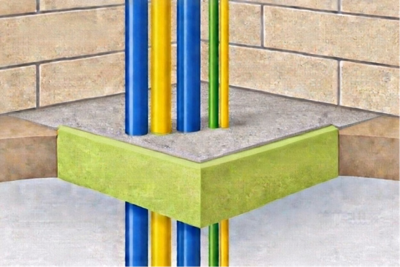
Infill flooring in vertical service riser shafts are frequently constructed with fireproofing or other materials through which pipework, cables and services, etc. are commonly routed (Fig.1). This fireproofing material may also be covered with a shallow cement type screed which could also give the impression that it is a solid concrete slab. Experience has shown that some infill flooring may pose serious safety risks such as a risk of falls arising from the perception that the infill is solid and sufficiently constructed to be load bearing and which may have not been properly designed, constructed and adequately maintained throughout the life of the building.
Key risks include
Vertical service riser shafts that can accommodate a person(s) may have:
- Infill flooring installed that may look solid but may have been constructed with materials such as non-load-bearing fireproofing board, or other similar type materials.
- Infill flooring where the load-bearing capacity of the built design has not been specified, to ensure it is safe.
- Had maintenance or upgrade works carried out, such as the installation of new pipework or services through vertical service riser shafts, which could possibly weaken the structural integrity of the flooring.
Corrective / remedial actions
Where a person(s) can physically access or stand in a vertical service riser shaft, there must be adequate protection in place such as a designed structural load-bearing floor or edge protection to prevent a person or equipment from falling through the vertical riser shaft.
The Health and Safety Authority is strongly advising that the following actions are taken by building owners / occupiers:
- Assess your buildings and identify the location of all existing vertical service risers which contain infill flooring where a person(s) could access and fall through.
- Review the buildings safety file and, or related drawings and certifications to confirm that all vertical service riser shafts which can accommodate or are accessible by persons that have infill flooring are of adequate design and construction.
- Where vertical service riser shafts with infill flooring do not have documented certification to prove their design and construction, then all work in these areas should be prohibited and measures taken to prevent any persons accessing them until they have been assessed by a suitably competent person[2].
- Prior to returning vertical service riser shafts into use, confirmation should be received in writing by the building owners / occupiers from the competent person that any vertical service riser flooring identified is safe and suitable to withstand any specified loading which could be imposed.
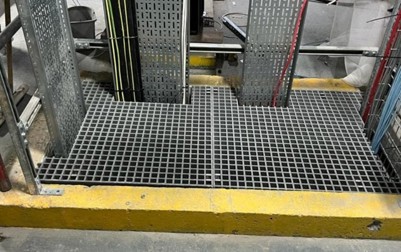
- Where it is identified that the vertical service riser flooring in place is unsafe all necessary measures must be taken to ensure that access to these areas remains prohibited until such time that adequate measures are taken to replace the affected infill flooring as soon as possible, subject to a design by a competent person (See Fig.2) and that any remedial works are carried out by a competent contractor(s), subject to a safe system of work.
- Where work is planned to be carried out on the vertical service riser shaft, ensure the infill flooring can accommodate future installations or modifications without weakening the structural integrity of the infill flooring.
Current and future design of vertical risers
The Health and Safety Authority is also strongly advising that the following actions are taken by building designers for consideration on future design of vertical risers in buildings that can accommodate a person(s) that the:
- Building designer should where possible incorporate design solutions to eliminate riser fall risks, at the earliest possible stage during the construction of the building,
- Person responsible for the design of the building should ensure that the vertical riser shaft flooring is always designed to be load-bearing (except where no access is required),
- Flooring in the service shafts is designed to remain safe even after additional services are added.
[1] Building owners, landlords, multi-occupancy tenants, facilities managers, contractors, designers, building services engineers and employers
[2] Structural engineer, building surveyor
Related File