Packaging
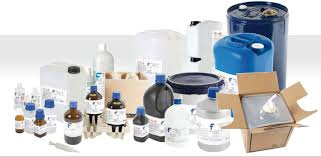 CLP aims to protect users from the hazards posed by substances and mixtures, accordingly the packaging contain such hazardous substances or mixtures should be designed and constructed so that its contents cannot escape, be damaged by its contents and it should remain intact during normal stresses and strains of handling. Furthermore, such packaging, sold to the general public, should not have a shape or design that would attract or arouse the curiosity of children or mislead consumers. Packaging in compliance with CLP should not look similar to those used for foodstuffs, medicine or cosmetic products.
Small packaging
CLP provides certain exemptions for substances and mixtures contained in packaging that is small (typically less than 125ml) or is otherwise difficult to label. The exemptions allow the supplier to omit the hazard and/or precautionary statements or the pictograms from the label elements normally required under CLP. The ability to reduce the amount of label elements depends on how hazardous the chemical product is.
 Outer packaging
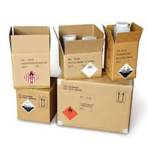
As a general rule, the labelling or marking in accordance with transport legislation is sufficient on the outer packaging where a hazardous substance or mixture is subject to both the transport (ADR) and the CLP regulations so the CLP label does not need to appear. Similarly, when a hazard pictogram required by CLP relates to the same hazard as in the rules for the transport of dangerous goods, the CLP pictogram does not need to appear on the outer packaging.
S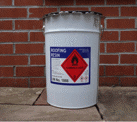 ingle packaging
Single packaging that meets the requirements for labelling under both the transport (ADR) and CLP regulations, must be labelled in accordance with both regulations. However, where hazard pictograms required under CLP are also required under ADR, the CLP pictograms need not be displayed.
Unpackaged substances and mixtures
Unpackaged materials may be supplied to professional users, whereby labelling information and other relevant hazard information is provided through other means than a label, usually the Safety Data Sheet. In exceptional circumstances, substances and mixtures may also be supplied to the general public unpackaged. In case the substance or mixture is listed in Part 5 of Annex II (currently only cement and concrete in the wet state), a copy of the labelling elements is always required, for example on an invoice or bill.
Tactile warnings and child-resistant fastenings
If substances or mixtures are supplied to the general public, then child-resistant fastenings and/or tactile warnings of danger have to be attached to their packaging where these substances or mixtures have certain hazard classes or if the packaging contains methanol or dichloromethane. These provisions apply regardless of the capacity of the packaging. See link for further details of the hazard classes and categories that this applies to.
Refill sales
Regulation (EU) 2024/2865 sets out rules for chemicals sold via refill.
Suppliers must ensure the following when supplying hazardous substances and mixtures via refill:
- the refill station carries labels corresponding to the labels for each hazardous substance or mixture supplied at the station;
- the labels on the refill station are firmly affixed horizontally on a visible place,
- risk mitigation measures are applied to minimise the exposure of humans, especially of children, and of the environment;
- measures are taken to prevent uncontrolled use of the refill station by children;
- the moment of refill, the supplier is available on site for maintenance and immediate assistance, including emergency assistance;
- refill stations can be operated outdoors and outside business hours only if immediate assistance can be provided;
- the substances or mixtures provided through a refill station do not react with each other in a way that could endanger clients or staff;
- staff of the supplier are appropriately trained to minimise safety risks to consumers, professional users and themselves;
- for every refilled package, the requirements on hazard communication in the form of labelling set are fulfilled;
- for every refilled package the requirements on packaging set out in Title IV of Regulation (EU) 2024/2865 are fulfilled;
- hazardous substances or mixtures are not provided at a refill station if the criteria for classification in any of the hazard classes outlined in paragraph 3.4 (k) of Article II of Regulation (EU) 2024/2865 are met.
Packaging Guidance:
HSA: Hazard, Labelling & Packaging according to the CLP Regulation
ECHA: Guidance on Labelling and Packaging
ECHA: Specific Labelling and Packaging Situations