

Waste Anaesthetic Gases
Anaesthetic gases are used in a variety of treatment fields throughout the healthcare sector (e.g. operating theatres, dentistry etc.) and in veterinarian practice.
The most commonly used anaesthetic gases are:
- Nitrous Oxide,
- Sevoflurane,
- Desflurane,
- Halothane,
- Enflurane, and
- Isoflurane.
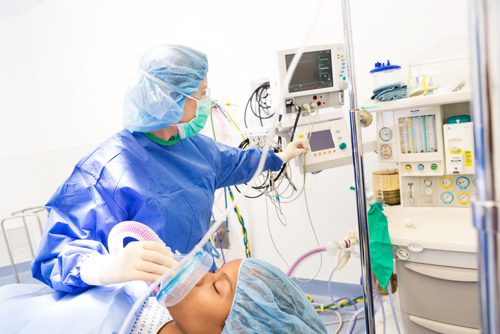
Healthcare staff may be exposed to Waste Anaesthetic Gases (WAGs) and vapours of concern in the workplace. During medical and surgical procedures, waste anaesthetic gas can become a source of exposure, where small amounts of volatile anaesthetic gases escape into the work environment having leaked from the patient’s anaesthetic breathing circuit.
Employees potentially affected by WAGs include; anaesthetists, theatre personnel (including nurses, attendants), recovery room personnel, maternity ward personnel (midwives, doctors, support staff), dentists, veterinary personnel, other clinical personnel (from X-ray, endoscopy etc), and delivery and maintenance personnel.
Effects of WAGs
Exposure to waste anaesthetic gases may have the potential to cause the following health effects:
- neurological effects including headache, fatigue, irritability, nausea, drowsiness, difficulties with judgment and co-ordination,
- liver and kidney disease,
- sterility, miscarriage and birth defects,
Exposure to WAG can occur in the following ways:
- through the delivery of aneasthetic gas during a procedure particularly during connection and disconnection from the system,
- leakage from tubing, seals and gaskets,
- poor ventilation,
- ineffective scavenging systems,
- patients’ exhalations in theatre, post-operative recovery and labour wards.
A well-designed system to control exposures should be considered, if systems are not managed, there is a risk of exposure to WAGs through:
- poor systems of work,
- ineffective maintenance systems,
- lack of information, instruction, training and supervision
The Law
The most relevant Irish health and safety legislation dealing with occupational exposures to anaesthetic and waste anaesthetic gases are:
- the Safety, Health and Welfare at Work (Chemical Agents) Regulations 2001-2026, particularly Regulations 4 – 6,
- the Safety, Health and Welfare at Work (Carcinogens, Mutagens and Reprotoxic Substances) Regulations 2024 -2026.
- the Safety, Health and Welfare at Work Act 2005 (S.I. No. 10 of 2005), particularly Parts 2 & 3 and Schedule 3,
- the Safety, Health and Welfare at Work (General Application) Regulations 2007-2023, particularly Regulations 6 and 28, Chapter 2 Part 6 and Chapter 3.
- 2026 Code of Practice for the Safety, Health and Welfare at Work (Chemical Agents) Regulations (2001 to 2026) and the Safety, Health and Welfare at Work (Carcinogens, Mutagens and Reprotoxic Substances) Regulations (2024 and 2026).
Employer requirements
By Law, the employer must:
- complete a risk assessment to evaluate exposure to waste anaesthetic gases to determine the risks.
- avoid exposure to hazardous substances by elimination or substitution with a non-hazardous chemical. Where this is not possible or practicable then the exposure must be controlled.
- reduce the exposure to waste anaesthetic gases so far as is reasonably practicable. Control potential exposures to WAGS and assess available engineering controls. For example, an active scavenging system.
- regularly inspect and maintain equipment for the safe delivery and removal of anaesthesia, including the anaesthetic gas machine, breathing circuits, waste gas scavenging devices, local exhaust and ventilation systems as per manufacturer’s guidelines;
- make arrangements to periodically review the effectiveness of control measures to protect employees from exposure to waste anaesthetic gases, an effective Occupational Hygiene monitoring programme will aid this,
- provide suitable information, instruction, training and supervision. Employees should be aware of the hazards associated with WAGs to prevent and control exposures to WAGs,
- put plans in place to address emergency situations. For the uncontrolled or accidental release or the escape of any substance, which, having regard to the nature of the substance, and the extent and location of the release or escape, which might have been liable to cause personal injury to any person, must be reported as a Dangerous Occurrence to the HSA.
- have a reporting system in place to report all accidents and incidents regarding the use of waste anaesthetic gases.
Risk Assessment
- A risk assessment should identify all persons who may be exposed including ‘at risk groups’. Refer to Vulnerable Workers - Health and Safety Authority.
- The risk assessment should consider engineering controls. Engineering controls should be considered to reduce the concentration of WAGs in the air. Active gas scavenger systems effectively capture and remove gases from the work environment. Ventilation systems should be installed in accordance with desired performance criteria e.g. Appendix 2 of HTM 03-01.
- The risk assessment should consider administrative controls, including safe operating procedures and training on the use of anaesthetic machines to employees to minimise the risk of exposure to WAGs.
- Refer to the anaesthetic gas Safety Data Sheet(s) and manufacturers guidelines for the anaesthetic equipment used.
- Engage with the competent person to monitor exposure. Develop an effective occupational hygiene monitoring programme to determine the levels of WAGs. The Occupational Exposure Limits (OELs) and Short-Term Exposure Limits (STELs) are outlined in the Health and Safety Authority’s 2026 Code of Practice for the Safety, Health and Welfare at Work (Chemical Agents) Regulations (2001 to 2026) and the Safety, Health and Welfare at Work (Carcinogens, Mutagens and Reprotoxic Substances) Regulations (2024 and 2026)
Further Information
HSA-accident-reporting-information-sheet-copy
Waste Anesthetic Gases - Overview | Occupational Safety and Health Administration
Health Service Executive (UK) Using nitrous oxide (gas and air) safely in maternity units